




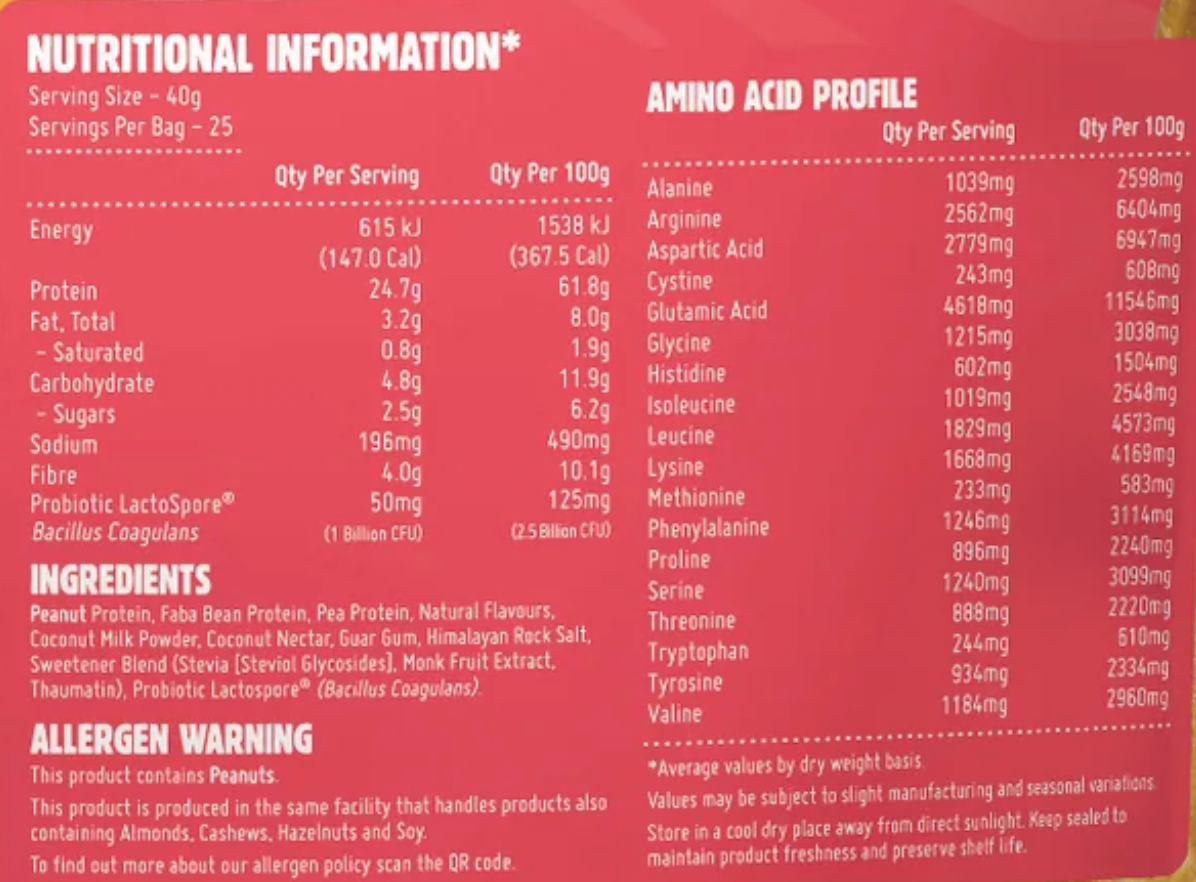
Ever flipped over a bag of Macro Mike protein and spotted a big table labelled "Amino Acid Profile", full of names like Leucine, Glutamic Acid and Tryptophan? It's easy to wonder what you're looking at. Are they vitamins? Extra additives? Something to be worried about?
Good news: they're none of those things. Amino acids are simply the building blocks of protein, and that table is just a breakdown of what's already inside every scoop.
💪 So, what is an amino acid?
Think of protein like a necklace made of beads, and each bead is an amino acid. When you eat protein, whether it's from a steak, a lentil curry or a scoop of plant protein, your body breaks that necklace apart into individual beads. It then uses those beads to build all sorts of things: muscle tissue, enzymes, hormones, even the antibodies that help fight off a cold.
There are 20 different amino acids in total, and they fall into two main groups.
Essential amino acids are the ones your body can't make on its own, so you have to get them from food. There are nine of these, including Leucine, Isoleucine and Valine (you might recognise these as BCAAs, or branched-chain amino acids, which get a lot of hype in the fitness world for supporting muscle recovery).
Non-essential amino acids are ones your body can produce itself, even if you don't eat them directly. Things like Alanine, Glycine and Glutamic Acid fall into this category. "Non-essential" doesn't mean unimportant though, it just means your body has a backup plan for making them.
🏋️ Why does it matter if a protein is "complete"?
You'll often hear the term "complete protein" thrown around, and it just means a protein source contains all nine essential amino acids in decent amounts. Animal proteins like whey are naturally complete, which is where a lot of the plant-based vs animal protein debate comes from.
Here's the thing though: most single plant proteins are a little light on one or two essential aminos. Pea protein, for example, tends to be a bit low in Methionine. That's exactly why we don't just use one plant source. By blending peanut, almond, pea and faba bean protein together, the gaps in one get filled in by the others, so you end up with a full, complete amino acid profile without needing anything from an animal.
📝 Why we list it on the label
Some brands skip this table altogether, but we think it's worth including because it shows you exactly what you're getting, not just "25g of protein" as a vague number, but the actual amino acids that make up that protein. If you're someone who trains seriously, this is genuinely useful info for understanding recovery and muscle repair. If you're not, it's still nice to know there's real substance behind the protein claim.
One thing worth clarifying: this table is specifically about amino acids, not vitamins or minerals. If you're after info on things like Vitamin B, iron, or magnesium, that's a separate section of the nutritional panel (when a product includes it), so don't go looking for it in the amino acid table itself.
💛 The takeaway
Amino acids aren't some mysterious lab ingredients, they're just protein in its most basic form. Every time you have a scoop of Macro Mike, you're getting a full spread of them, essential and non-essential alike, thanks to our blend of plant proteins working together. No gaps, no compromises, just a complete amino acid profile doing its job.